School Choice
Hawaii Traditional Enrollment Fell to 150,280
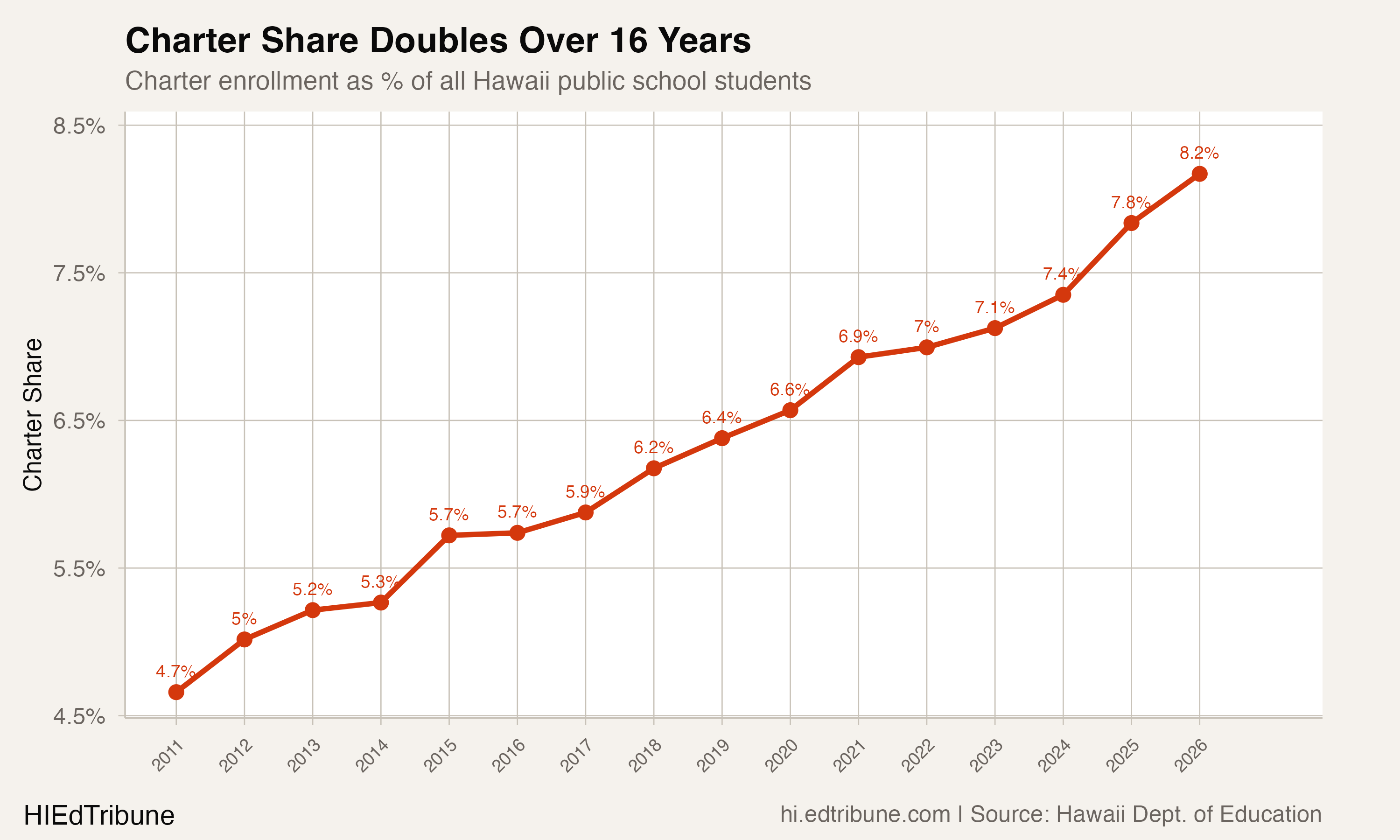
County-operated schools lost 3,702 students in 2025-26, the largest annual decline since 2021, while charter enrollment rose by 277.
Data-Driven Education Journalism for the Aloha State
Education News & Data
Local education reporting from every corner of Hawaii, grounded in Hawaii Department of Education data.
Hawaii's SpEd graduation rate hit a record 68.1% in 2025, but a 32.7-point spread across complex areas shows how uneven the progress is.
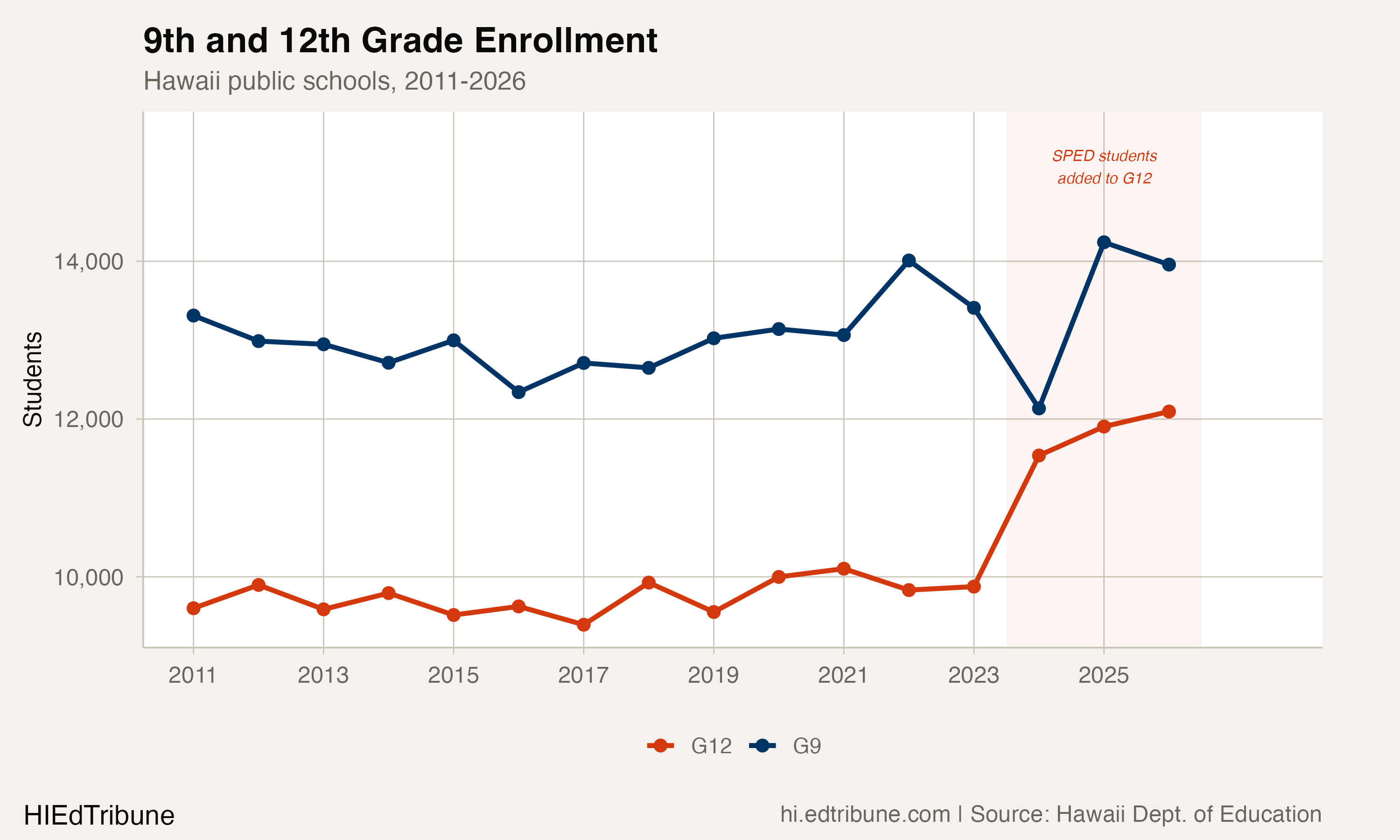
The 2025-26 grade 9 total exceeded prior-year grade 8 by 1,283 students, but aggregate counts cannot identify who entered or from where.
The female-male graduation-rate gap fell to 2.9 points in 2025, the lowest in Hawaii's 2010-2025 package series.
Hawaii's foster care four-year graduation rate fell 15.9 points since 2018 while every other vulnerable group compared here improved, opening the widest equity gap in the state.
County-operated schools lost 3,702 students in 2025-26, the largest annual decline since 2021, while charter enrollment rose by 277.
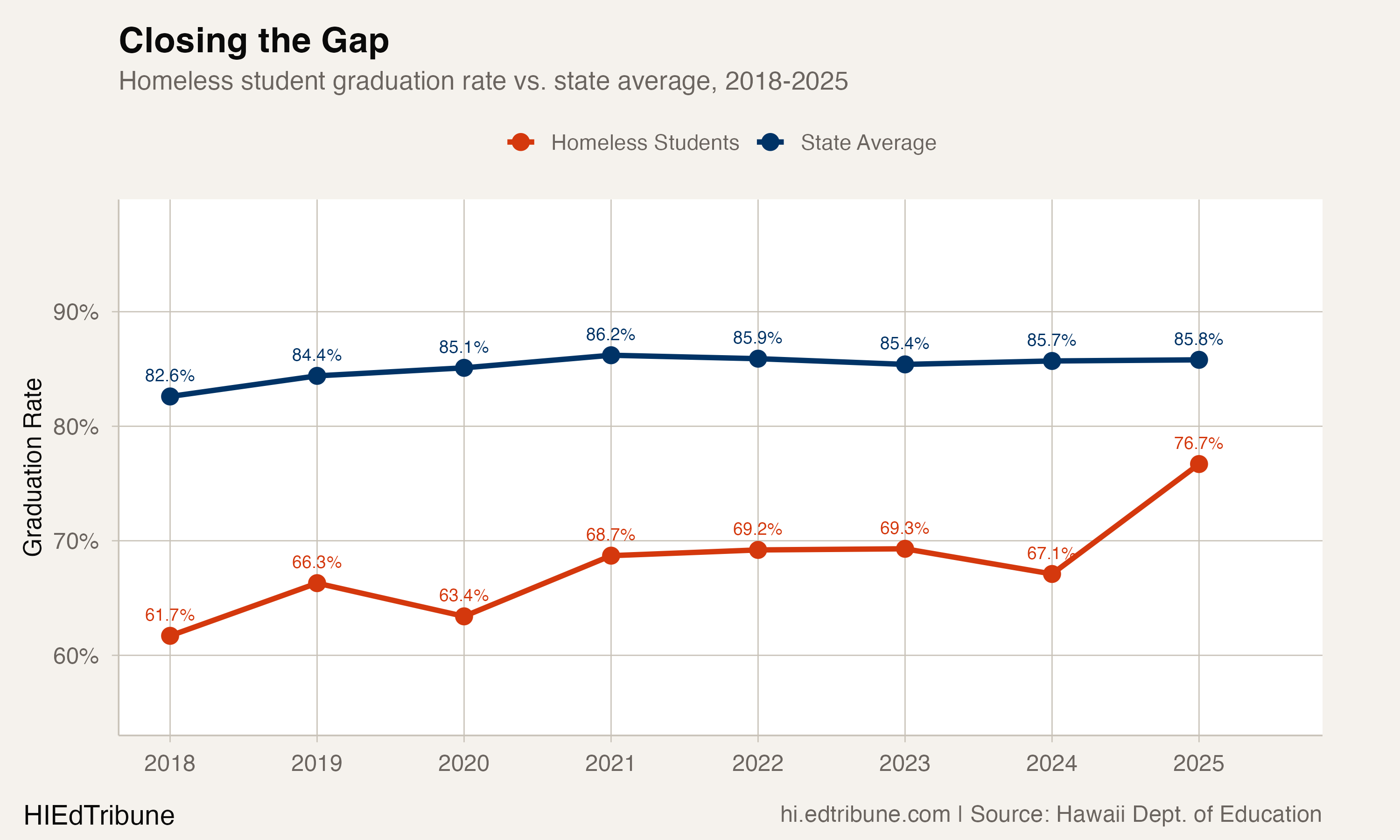
Their graduation rate rose 15.0 points from 2018 to 2025, the largest gain among 19 matched Hawaii subgroups.
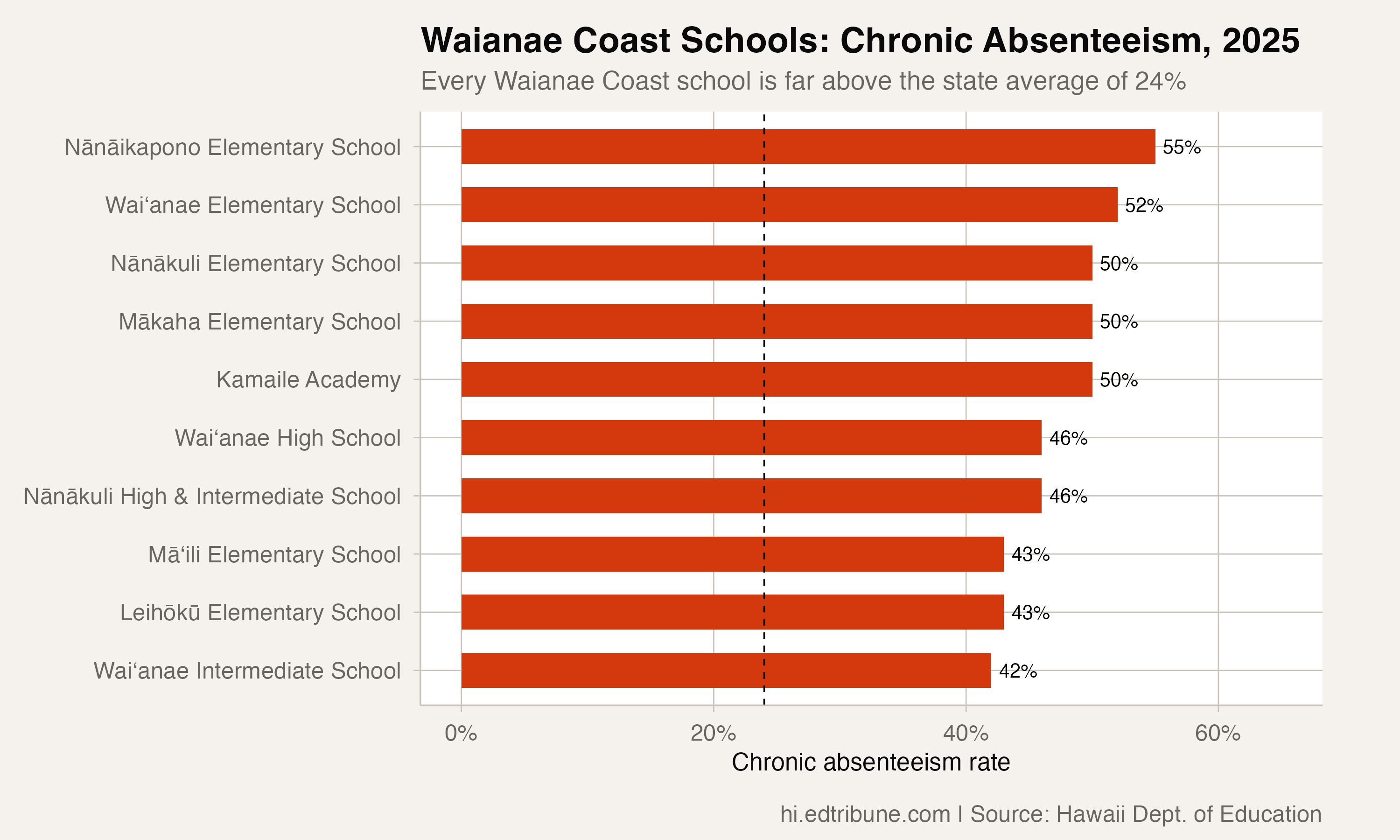
In 2024-25, ten schools on Oahu's Waianae Coast had chronic absence rates between 42% and 55%, at least 18 points above the state; six improved from the year before.
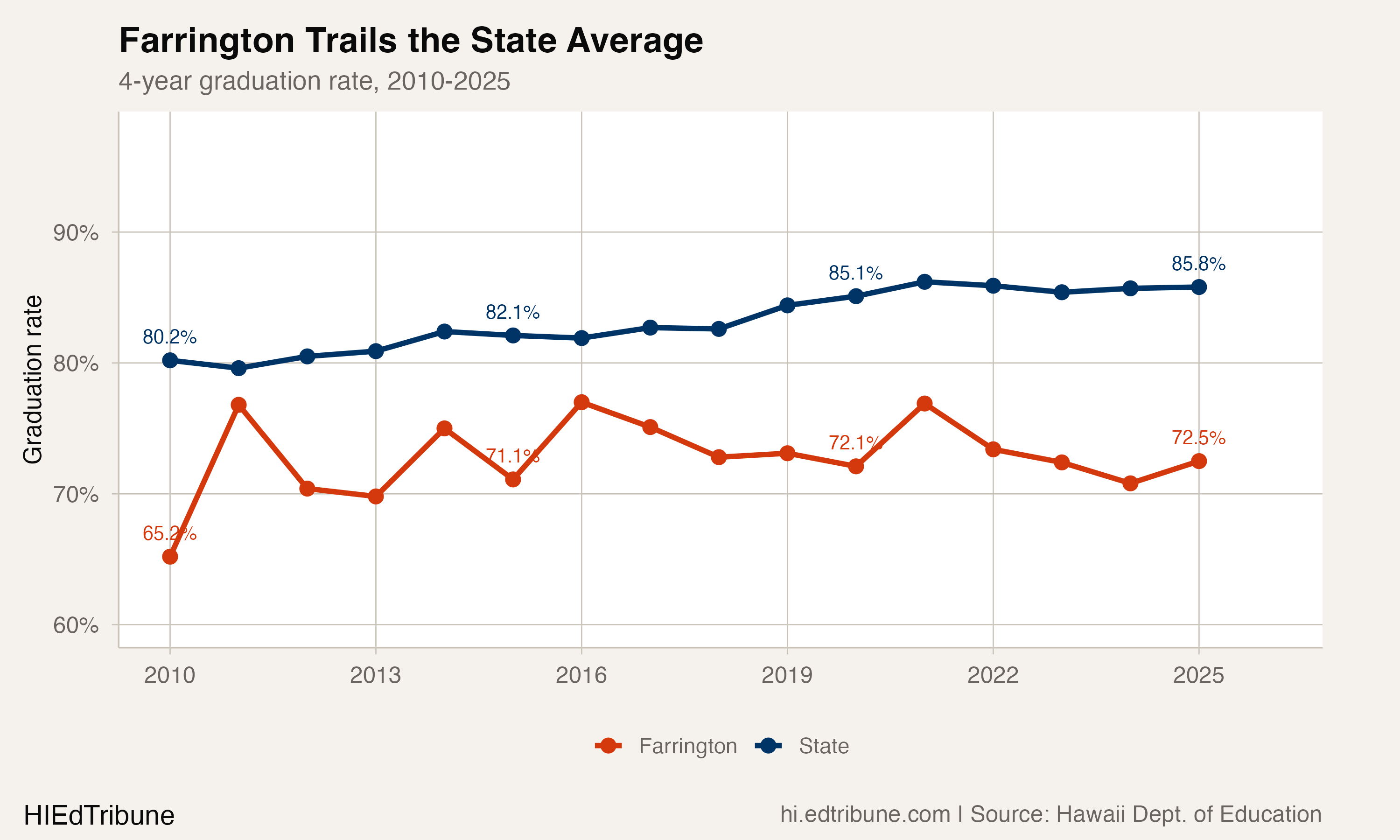
Farrington High's 2025 graduation rate ranked sixth from the bottom statewide, with large race, service-population and gender gaps.
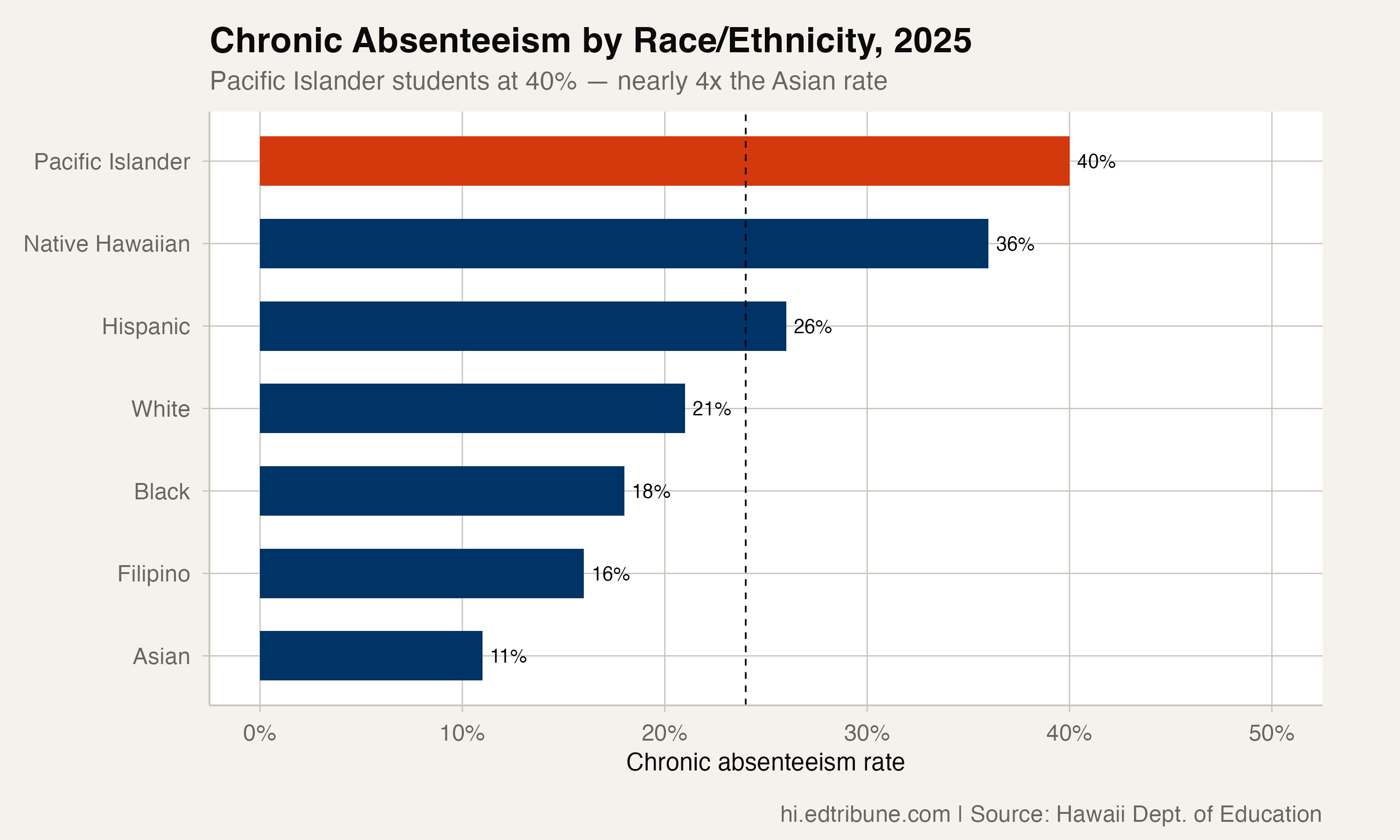
In 2024-25, 40% of Pacific Islander students in Hawaii missed 18 or more days, the highest rate of any group, 29 points above Asian students; the gap narrowed 2 points on the state's newer measure.
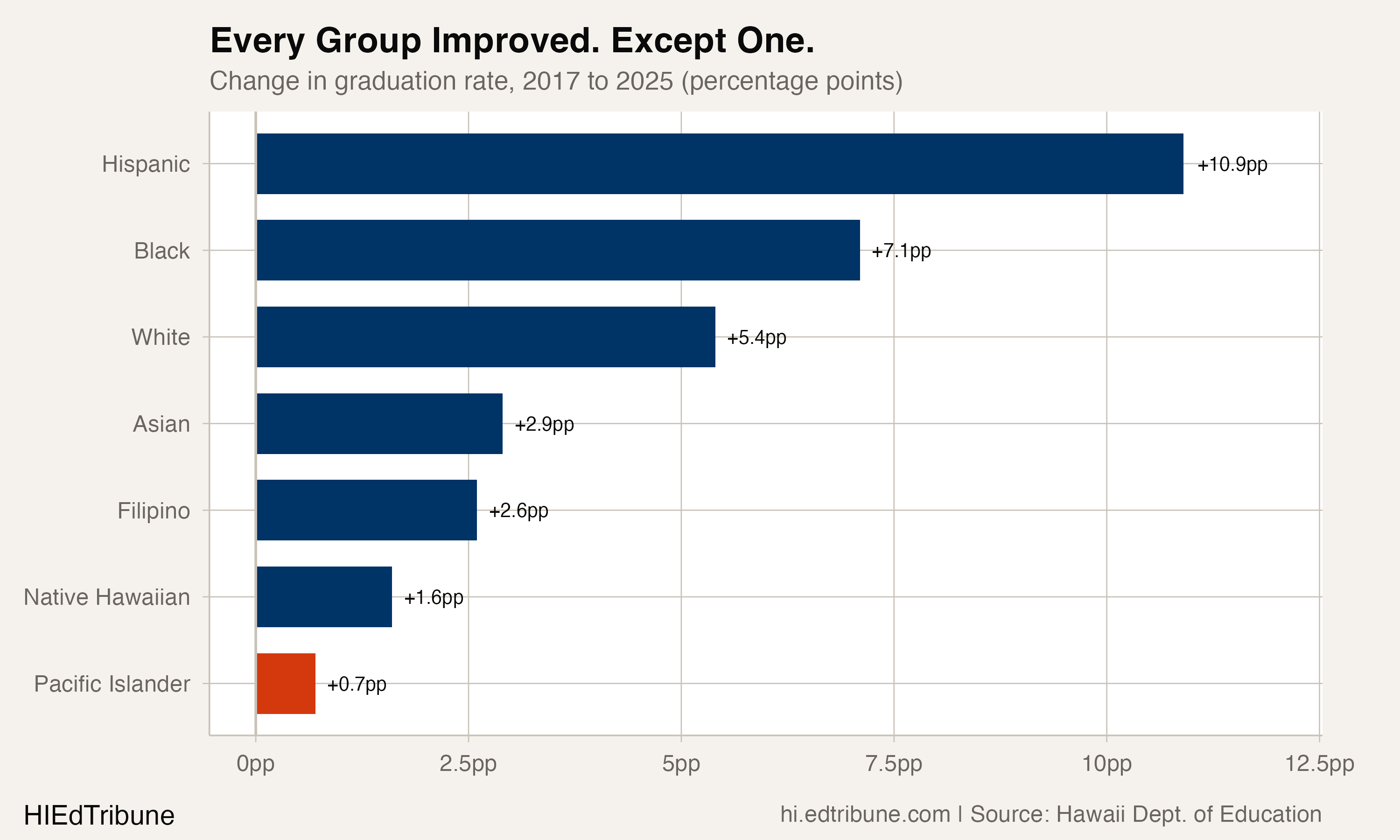
Pacific Islander students graduate at 68.4% in Hawaii, a 17pp gap below the state average that has barely moved in nine years of tracking.
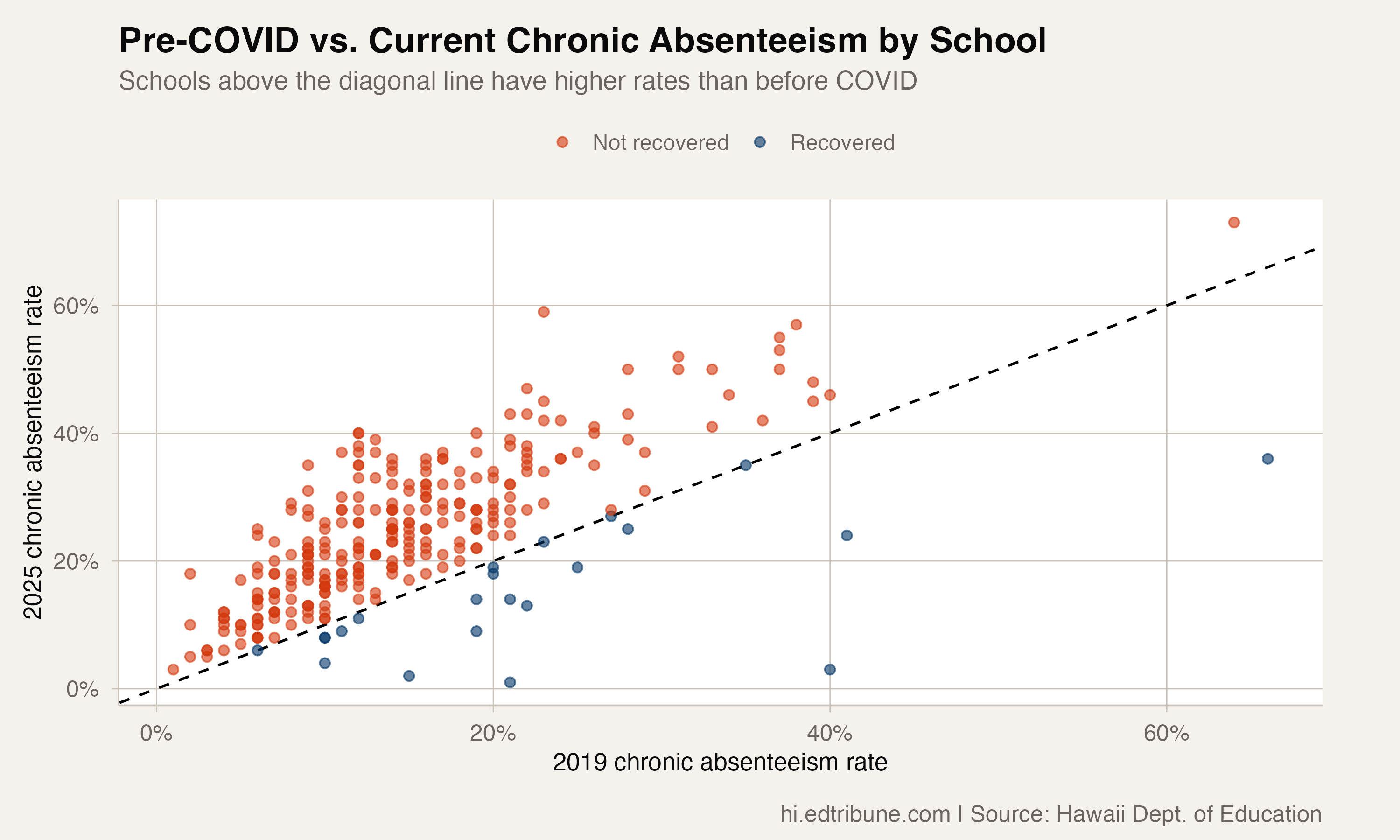
182 of 293 Hawaii schools cut chronic absence in 2024-25. Even allowing for the state's new, higher threshold, at least 268 of 290 remain above their 2018-19 rates.
Hawaii's 9th-to-12th survival rate hits 90% for the first time, but a 2024 reclassification of students who receive special education inflated the count. The real gain is smaller.
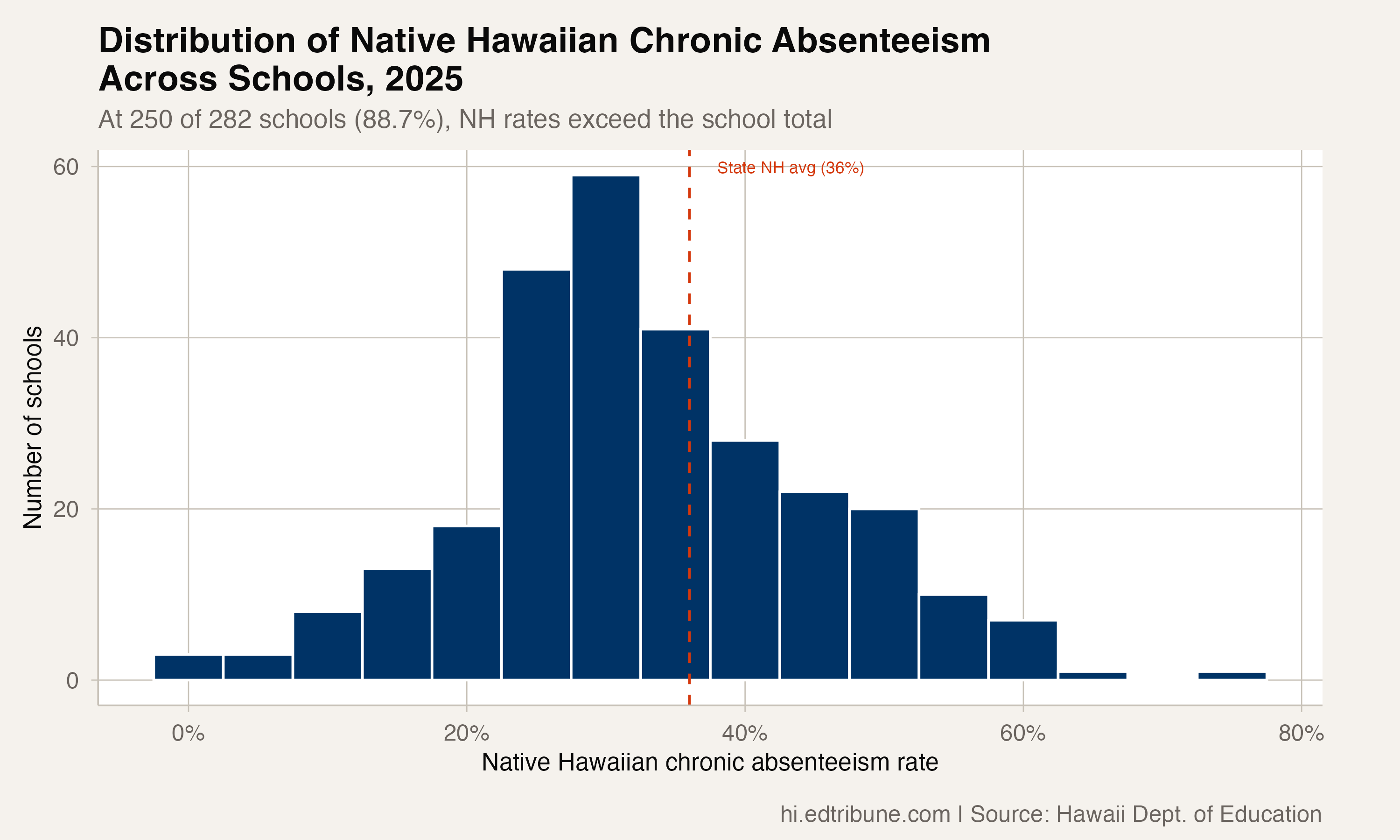
In 2024-25, Native Hawaiian students were chronically absent at higher rates than their school's overall student body at 250 of 282 Hawaii schools, 88.7%, a share that has held near that level for three years.
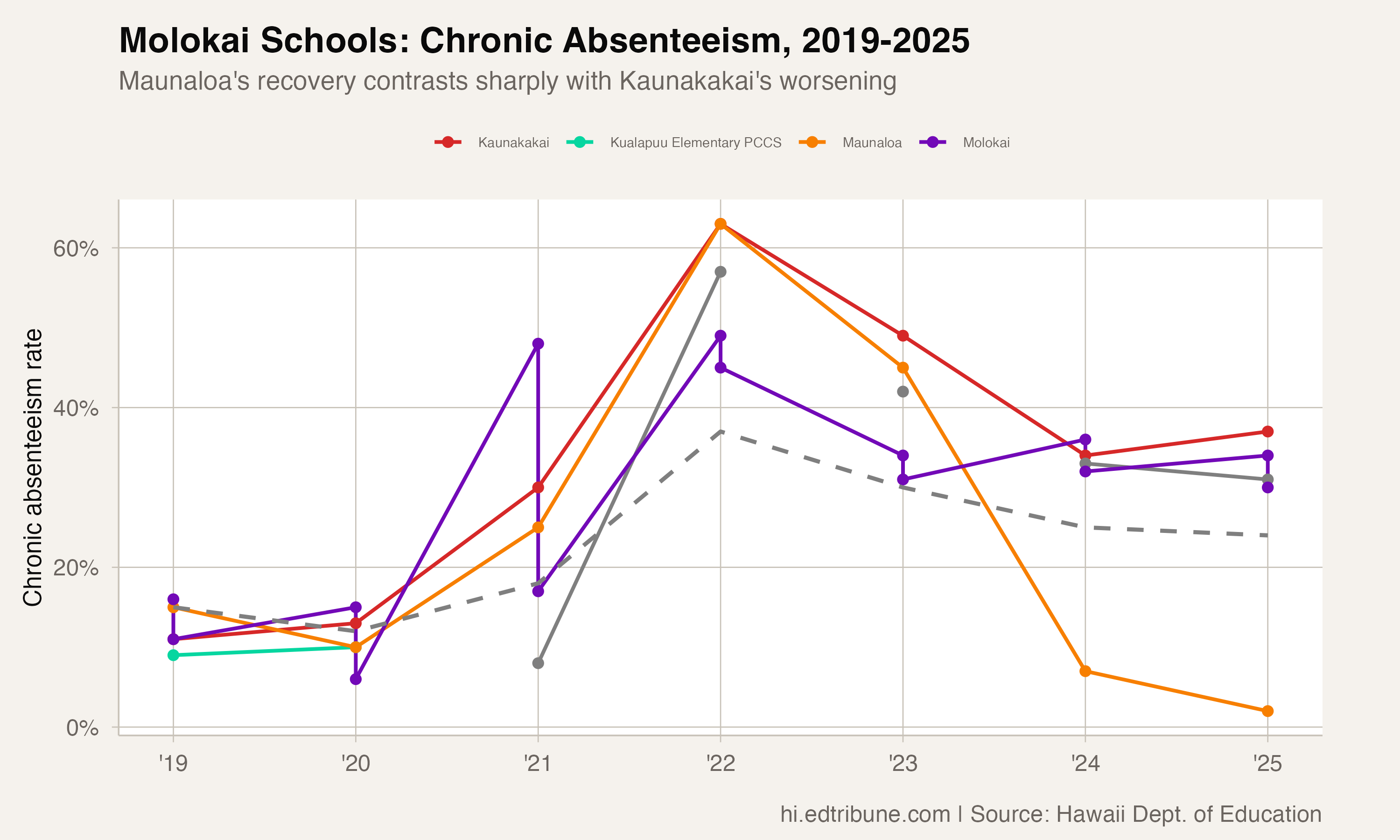
Maunaloa Elementary on Molokai had a 2% chronic absence rate in 2024-25, second-lowest of 295 Hawaii schools, after 7% the year before on the same measure.
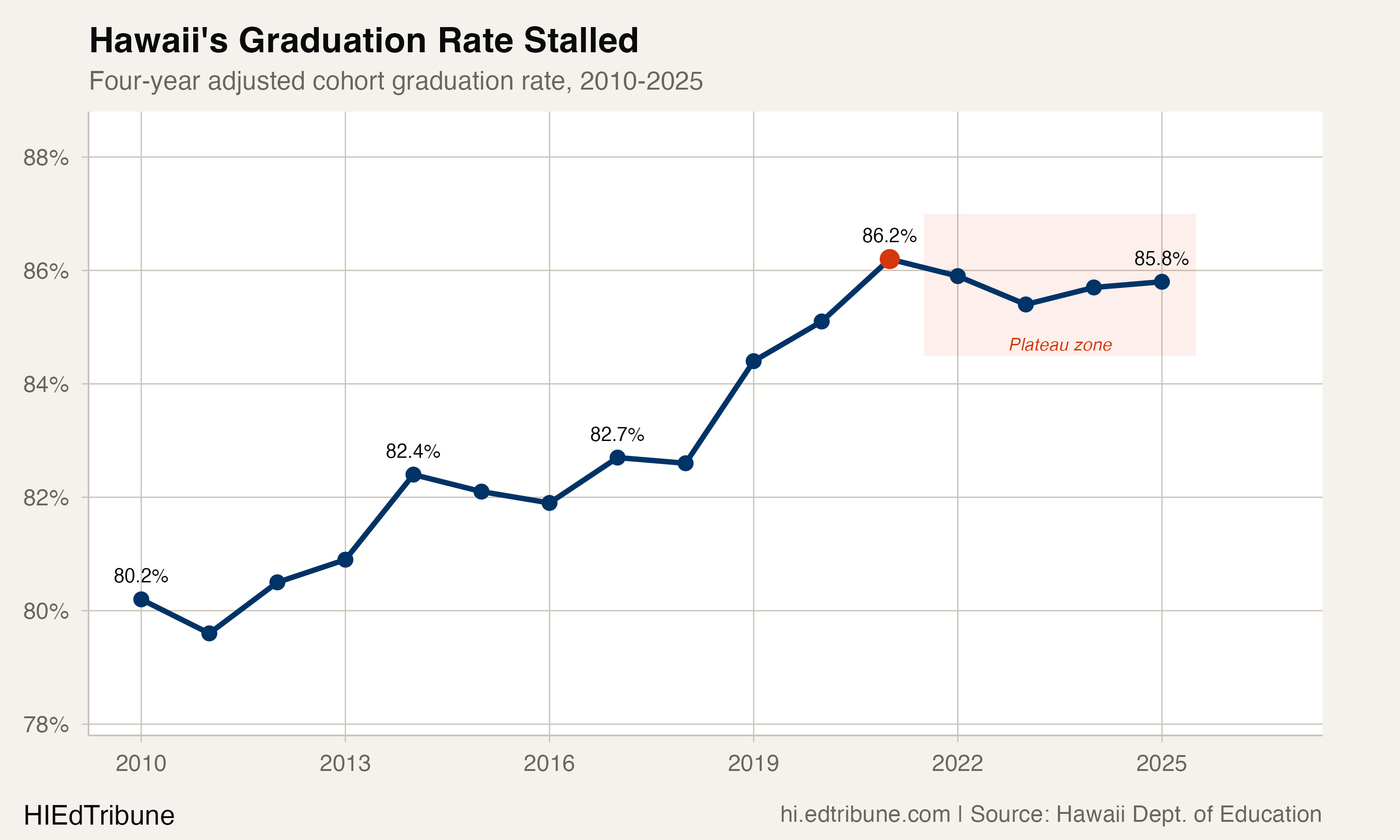
Hawaii's graduation rate flatlined near 86% after a decade of gains. A 17-point Pacific Islander gap reveals who the plateau leaves behind.