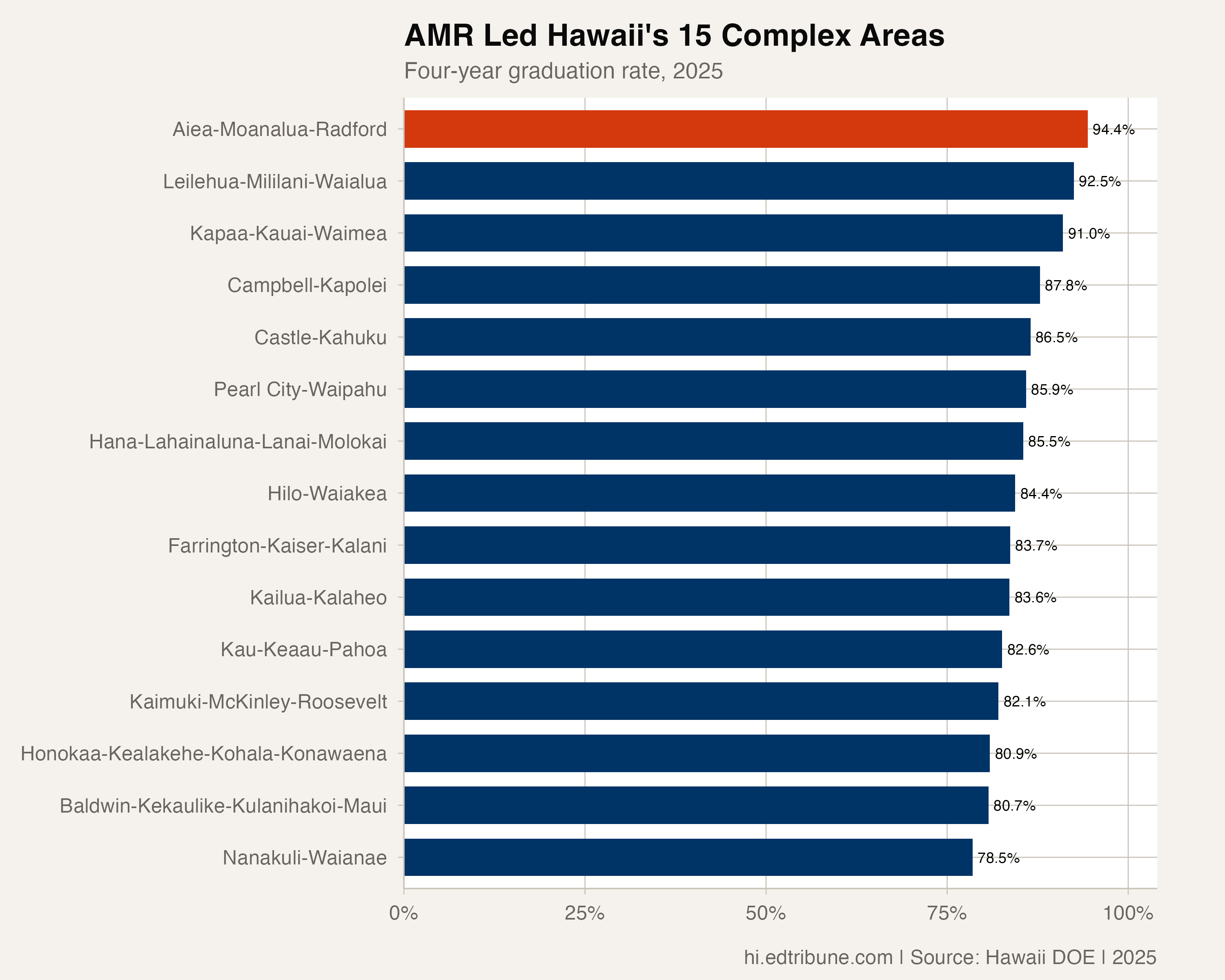
Aiea-Moanalua-Radford reported a 94.4% four-year graduation rate in 2025. That was the highest rate among Hawaii's 15 complex areas and AMR's highest across the 16 reporting years from 2010 through 2025.
Radford High reported 95.5% in 2025, also its high across the same 16-year panel. Both record checks use stable complex-area and school IDs rather than names that can change over time.
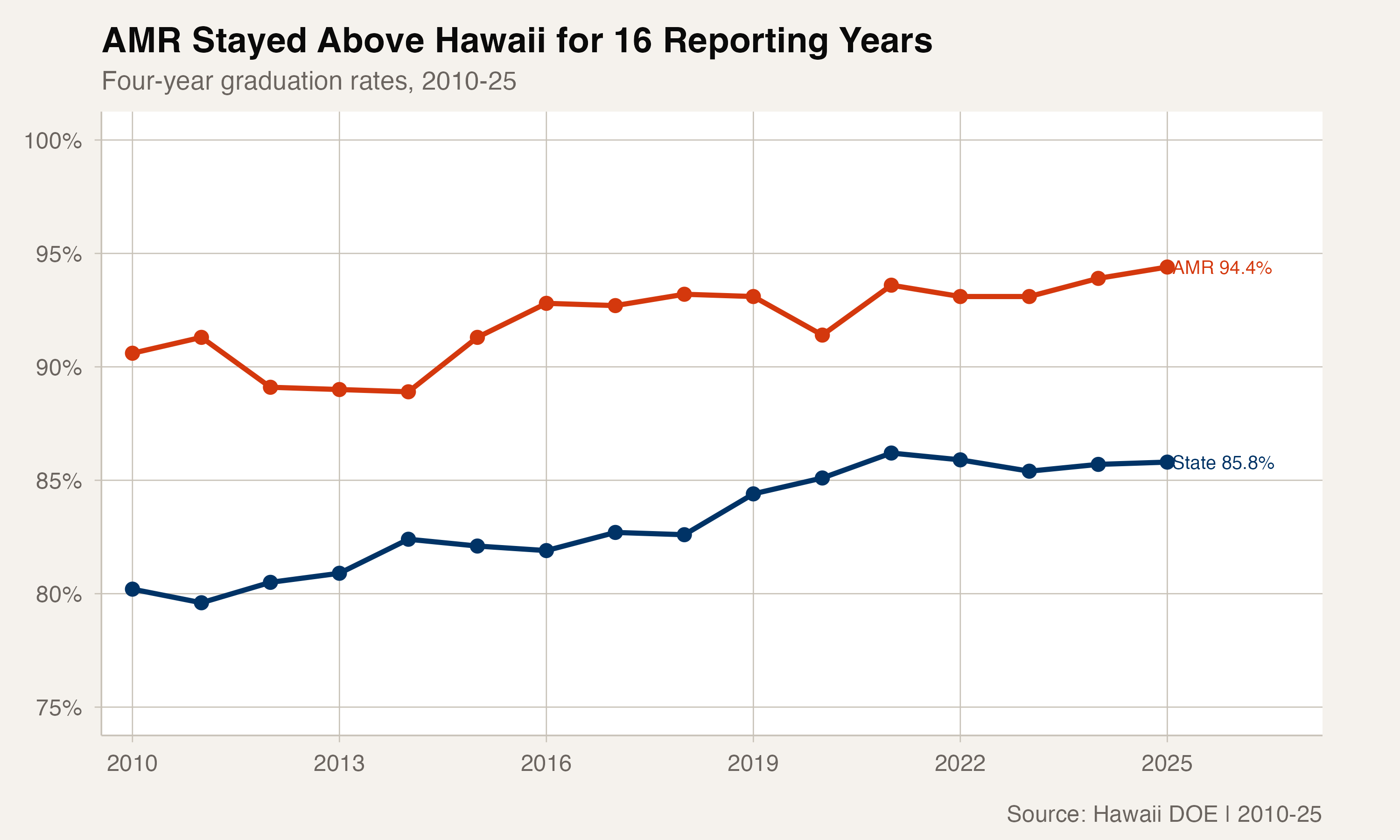
Sixteen years above the state
AMR's rate was 90.6% in 2010, compared with 80.2% statewide. By 2025, AMR had risen 3.8 points to 94.4%, while the state had risen 5.6 points to 85.8%.
AMR remained above the state in every annual report. Its margin averaged 8.8 percentage points. The narrowest gap was 6.3 points in 2020, and the 2025 gap was 8.6 points.
The full-history test matters because two Hawaii complex areas changed names during the period. Grouping records by each complex area's ID keeps its earlier results in the series after a name change.
Leading the complete 2025 field
The 2025 comparison includes one all-student rate for each of the state's 15 complex areas. HIDOE reports charter schools as a separate group, which is not counted as a complex area here. AMR ranked first in that complete field.
Aiea-Moanalua-Radford, Leilehua-Mililani-Waialua, and Kapaa-Kauai-Waimea were the only three complex areas above the statewide rate in all 16 annual reports. Only two complex areas, including AMR, were at their full-panel highs in 2025.
The military-connected subgroup
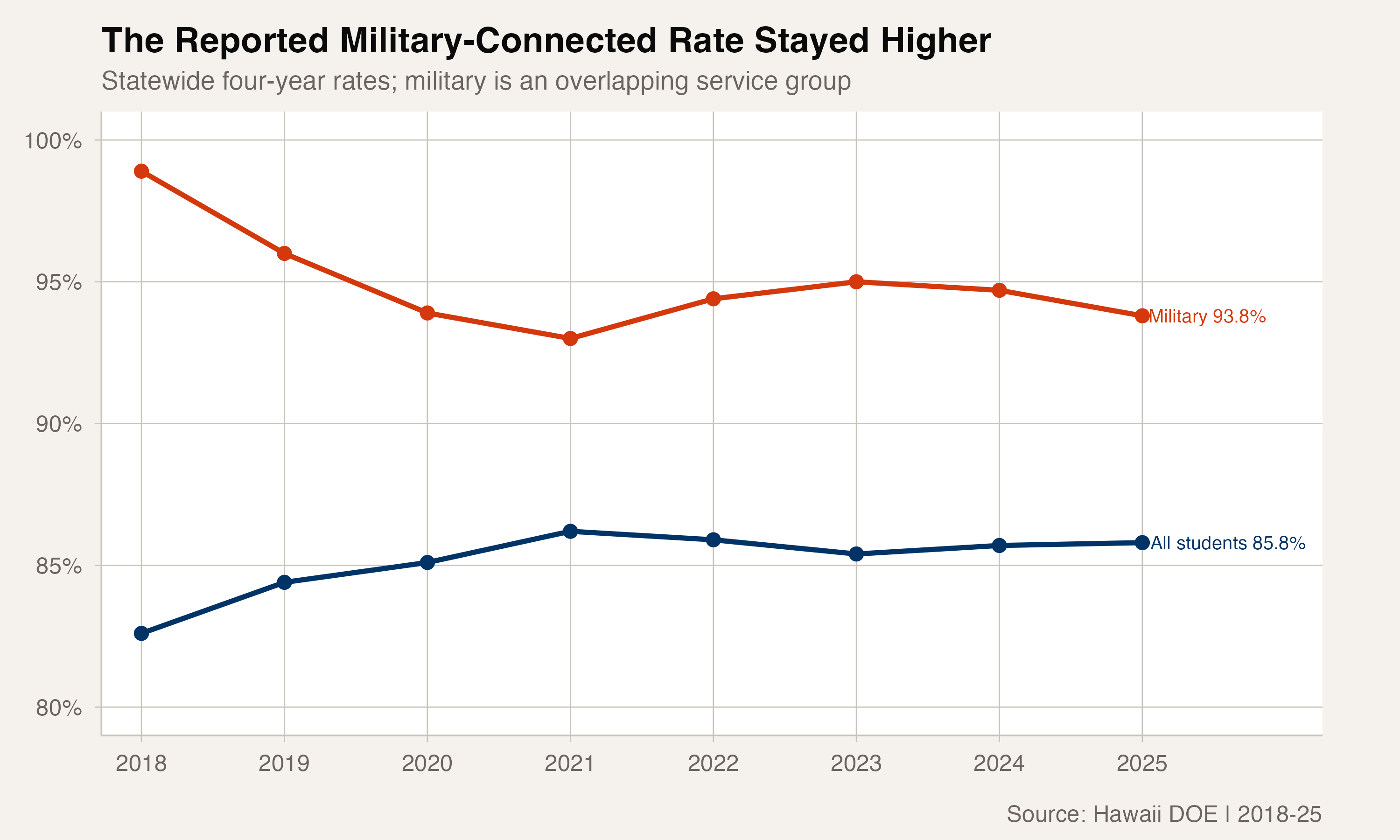
Hawaii began reporting a statewide military-connected subgroup in 2018. Across the complete 2018-through-2025 window, the reported military-connected rate remained above the all-student rate.
In 2025, the statewide military-connected rate was 93.8%, compared with 85.8% for all students, an 8.0-point gap. AMR's reported military-connected rate was 97.5%. Radford High's was 100.0%.
Military-connected students can also belong to other groups in the graduation records. The reported rates describe how this group fared in AMR and Radford, but they cannot show whether military connection contributed to the higher rates.
What the records do not establish
The graduation records show the reported rates, ranks, and changes over time. They lack the cohort counts and program information needed to investigate why AMR led the state.
The mix of students in each graduating class may have changed, but the published rates cannot show by how much. The records also cannot tell us whether complex-area practices, school programs, family supports, or transfer policies played a role.
Graduation rates come from the Hawaii Department of Education's Accountability Resource Center Hawaii, covering the 2010 through 2025 reporting years.
Detailed code that reproduces the analysis and figures in this article is available exclusively to EdTribune subscribers.
Discussion
Sign in to join the discussion.
Loading comments...